



1940nm Diode Laser EVLT Machine for Clinics – Minimally Invasive Varicose Vein Treatment | ZENI
$21,000.00
100 in stock
Description




Clinical-Grade Varicose Vein Treatment. Minimally Invasive.
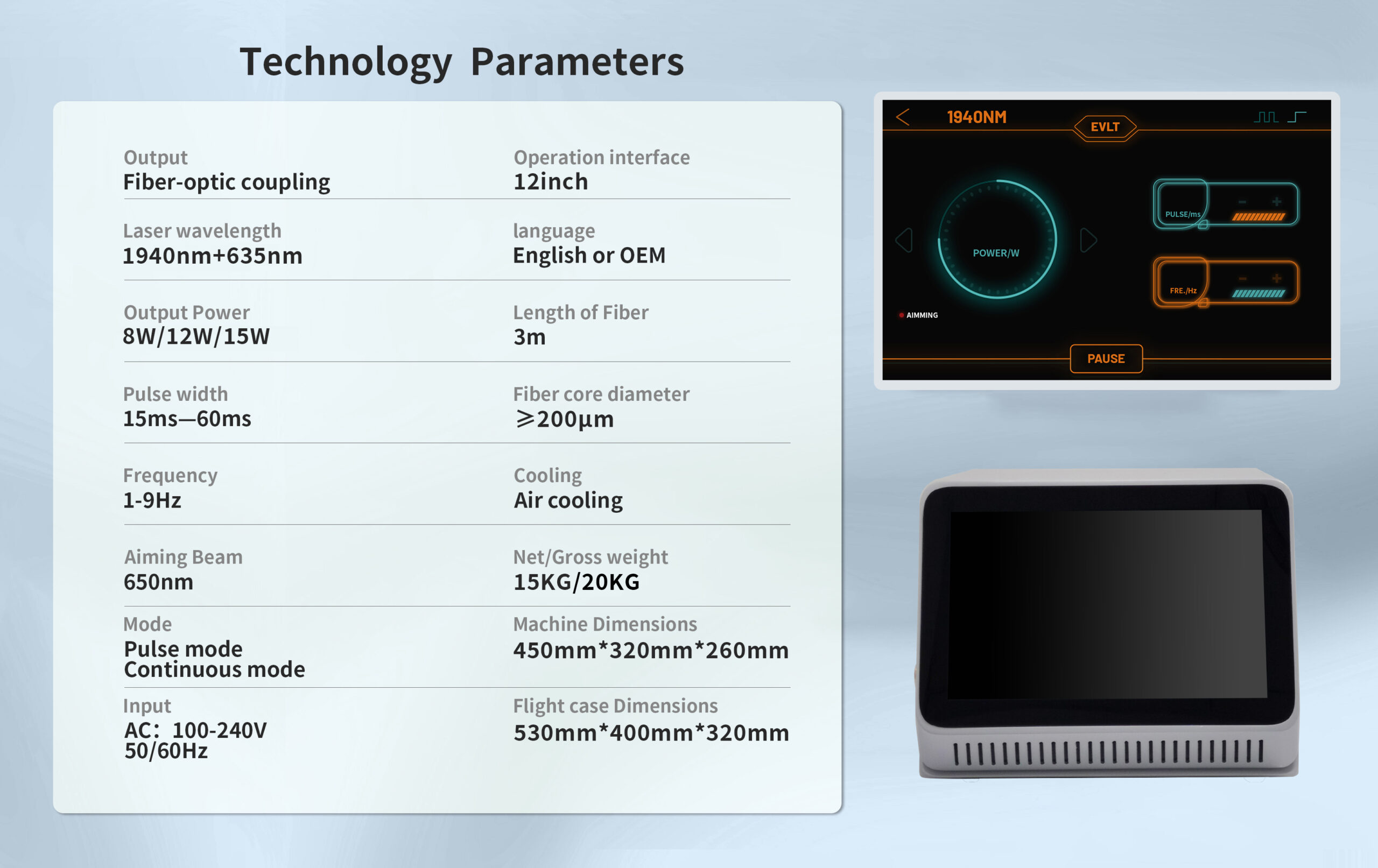
The 1940nm diode laser EVLT machine for clinic delivers endovenous laser treatment for varicose veins through a minimally invasive fiber-based procedure. The 1940nm wavelength has the highest water absorption coefficient among commonly used EVLA wavelengths — 3 times higher than 1470nm in blood and vein wall. This means heat is more localized, thermal penetration is lower, and effective vein closure can be achieved at lower energy levels with fewer local complications. Available in 8W, 12W and 15W configurations to match different clinical requirements.
1940nm Diode Laser
Highest water absorption among EVLA wavelengths — 3× higher than 1470nm in blood and vein wall.
Endovenous Laser Treatment
Fiber-based treatment delivered inside the vein under local anesthesia. No surgical incisions, no scarring.
8W / 12W / 15W
Three power configurations available to match different clinical requirements and vein sizes.
Walk Out, Carry On
Patients typically walk out of the clinic and resume daily activities immediately after treatment.
Why 1940nm Outperforms 1470nm in Clinical Studies
The 1940nm wavelength has an even higher water absorption coefficient than the widely used 1470nm laser. Theoretically, this results in more focused thermal effects within the vein wall at lower power settings, potentially reducing postprocedural pain and inflammatory responses[reference:0]. Published clinical data supports this advantage. A prospective study of 100 patients treated with 1940nm EVLT reported 100% complete occlusion of treated venous segments at 6-month follow-up, with no major complications including deep vein thrombosis or skin burns. The average pain score was 2.3 on a numeric rating scale, indicating only mild discomfort[reference:1]. A comparative study of 277 patients found that the 1940nm group required significantly lower linear endovenous energy density (42 vs. 62 J/cm for the great saphenous vein, P < 0.001), and postoperative complications including ecchymosis, superficial thrombophlebitis and paresthesia were more frequent in the 1470nm group. Pain scores at 6 hours were significantly lower with 1940nm (3.5 vs. 4.5, P = 0.05)[reference:2]. In summary, 1940nm offers advantages in terms of reduced pain and quicker recovery compared to 1470nm[reference:3]. Explore our vascular treatment options and laser-based systems for related service planning.
Related products
-
-
Sale!
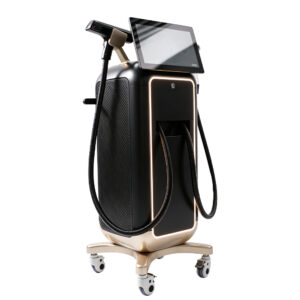
4 Wavelength Diode Laser Hair Removal Machine with Dual Handles | ZENI
Original price was: $2,199.00.$1,999.00Current price is: $1,999.00. -
-
Reviews
There are no reviews yet.