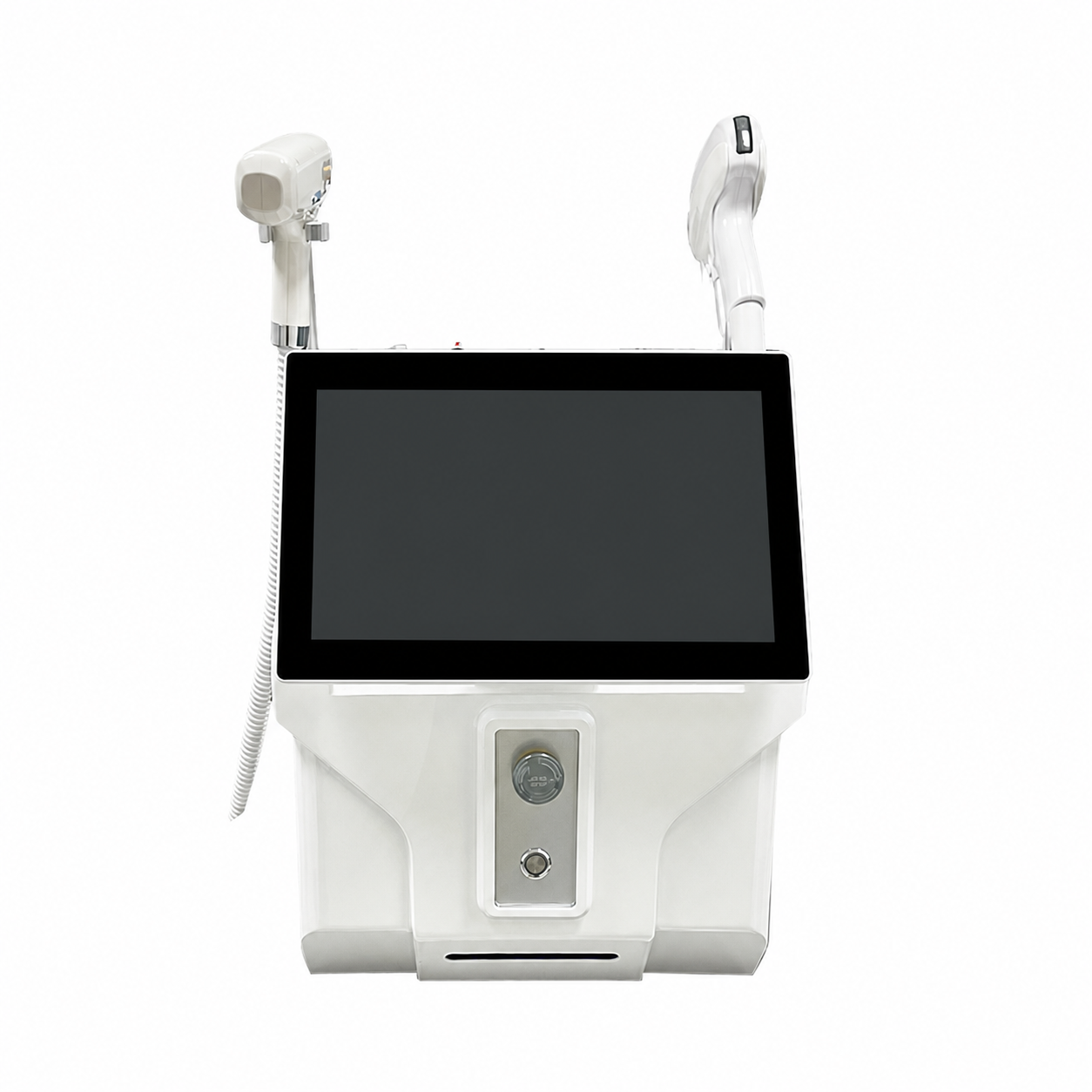
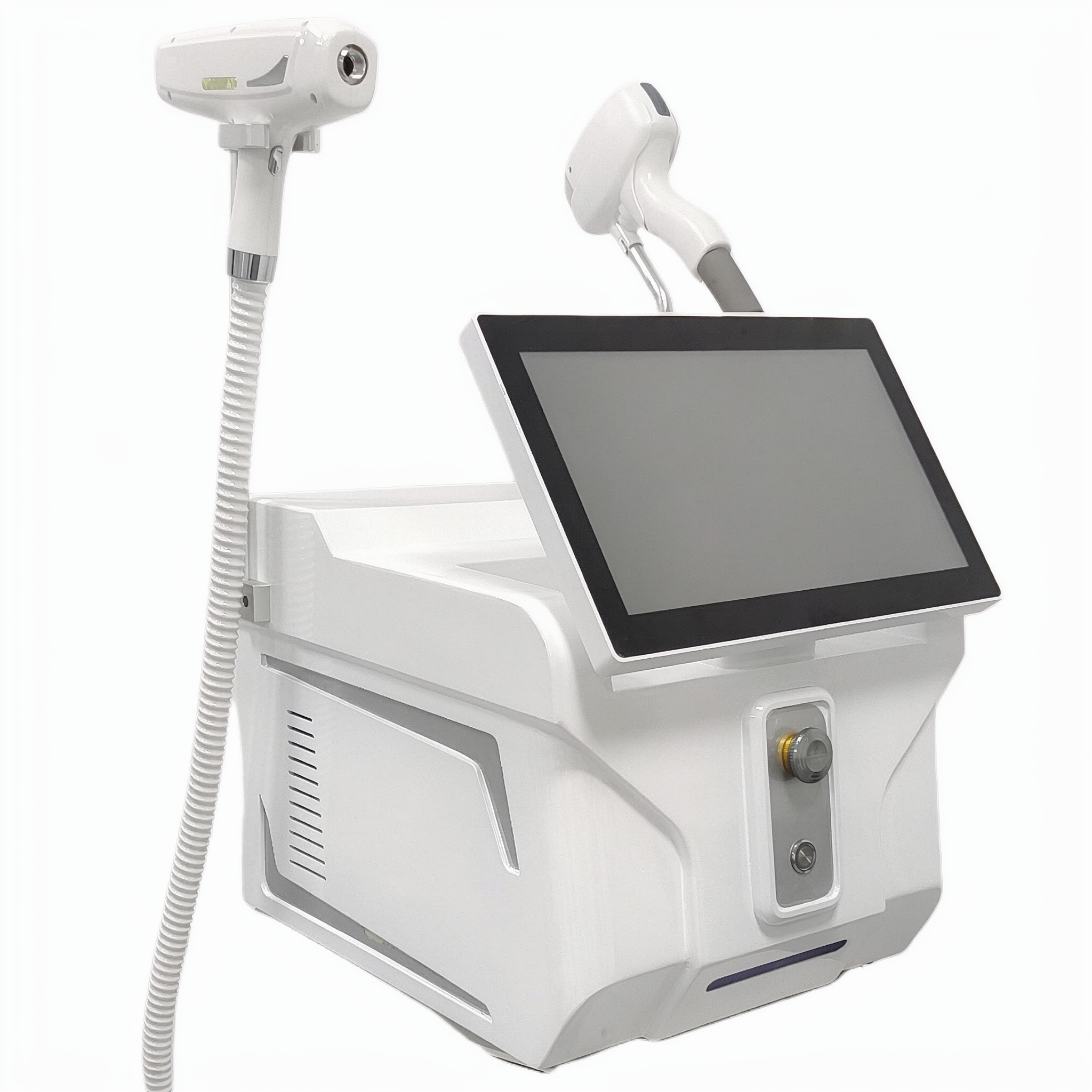
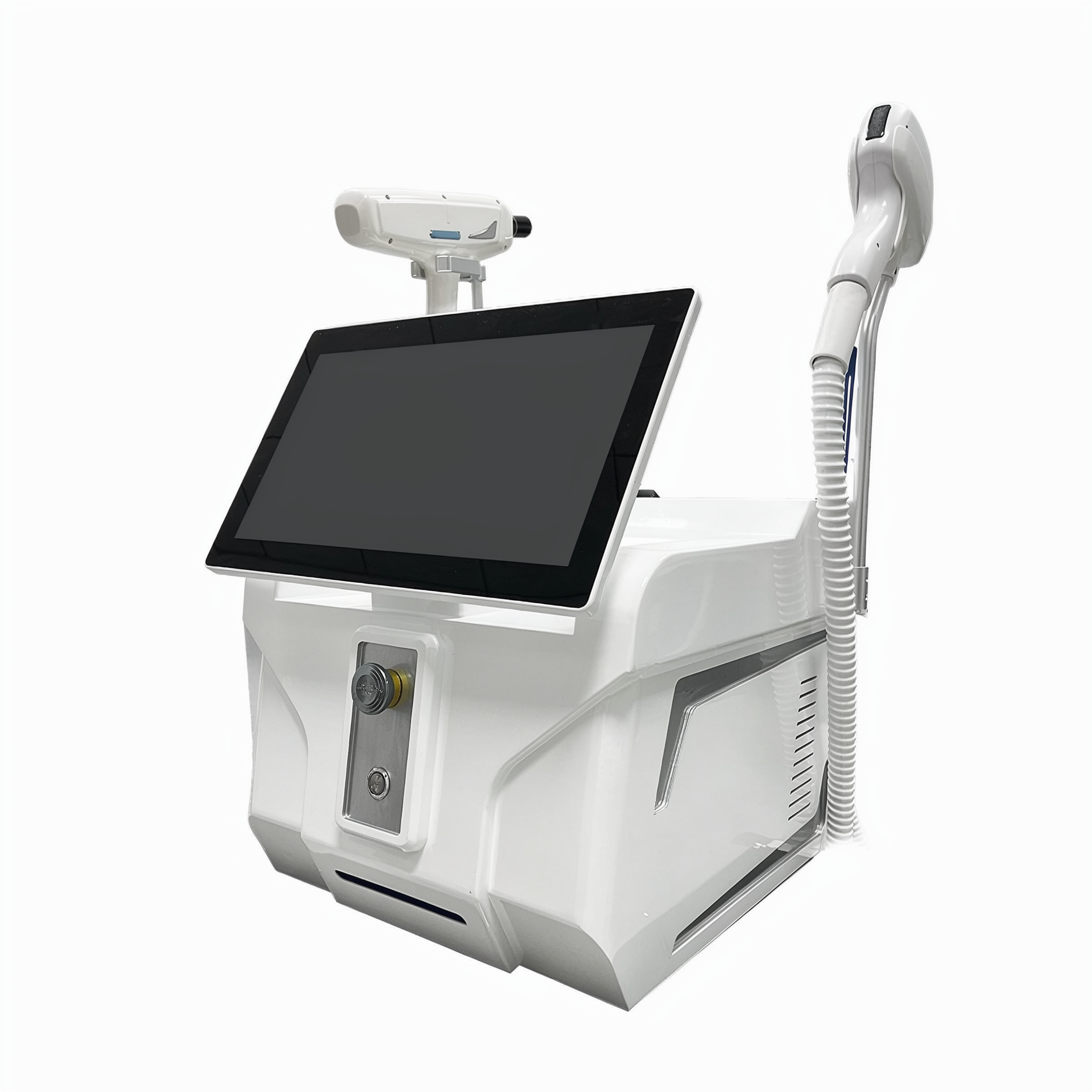


5000W 2 in 1 Diode Laser Pico Machine – Upgradeable 6Bar+FAC to 10Bar, 4 to 6 Wavelengths | ZENI
$1,449.00
100 in stock
Description


Upgrade the Power. Expand the Wavelengths. Two Paths, One Platform.
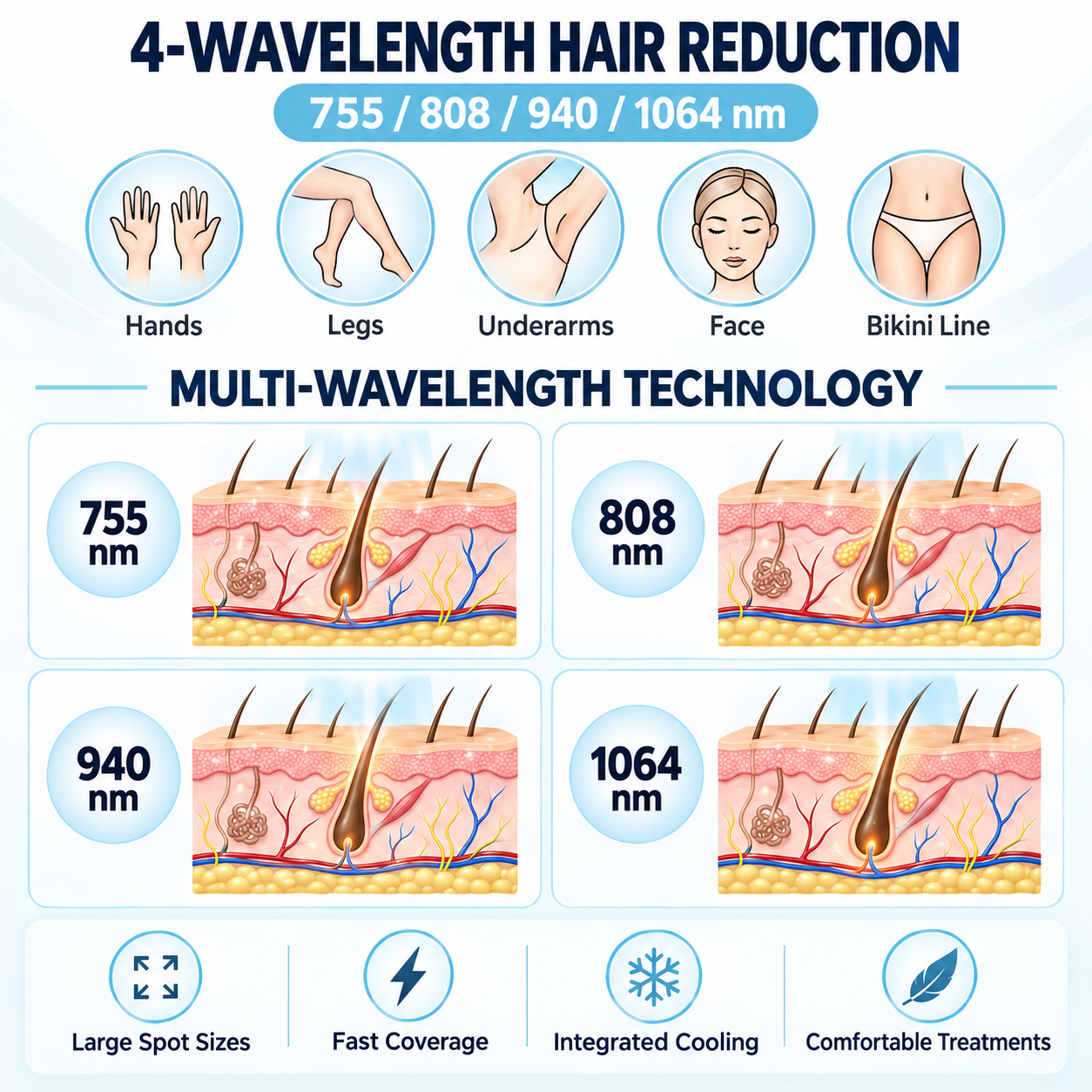
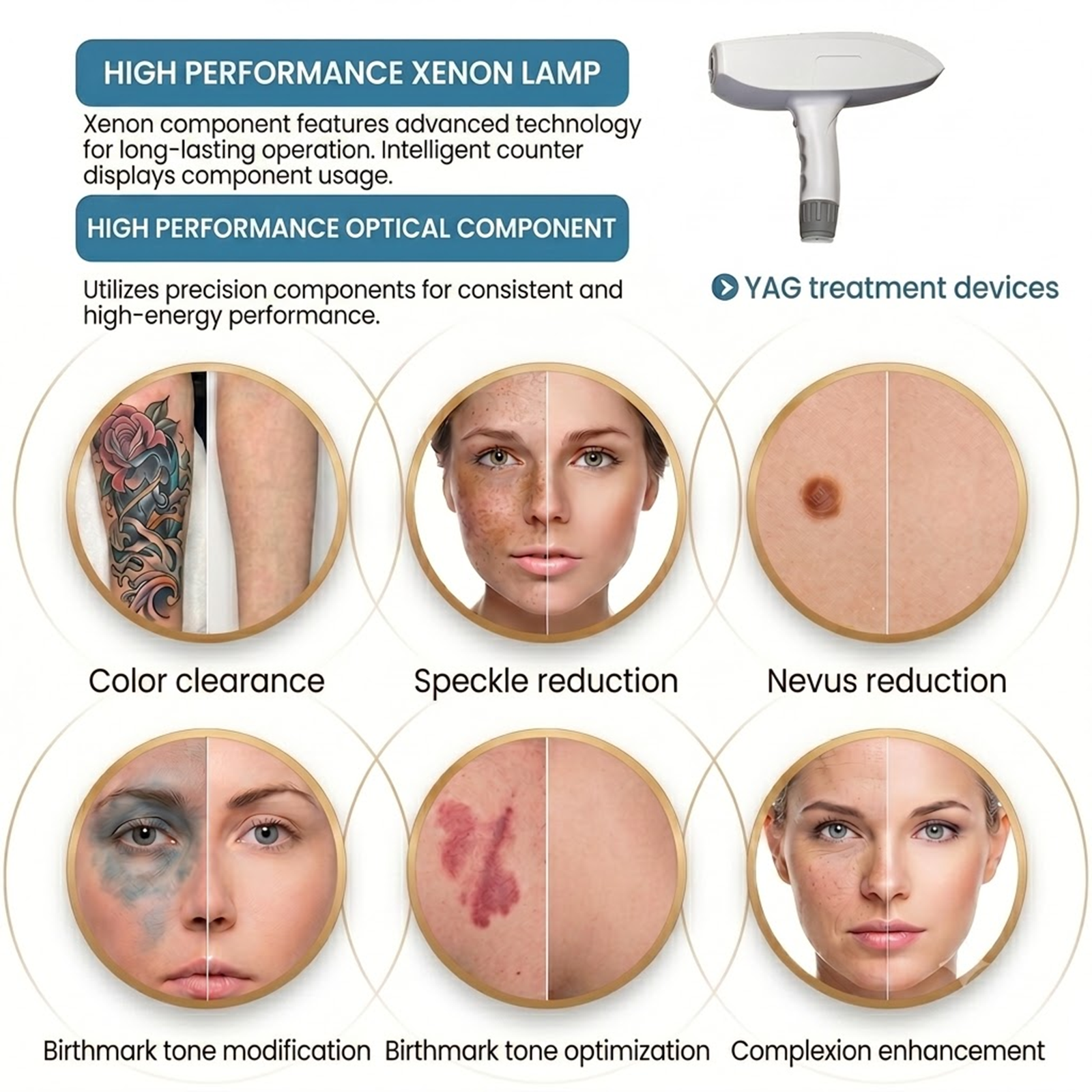
The 5000W 2 in 1 diode laser pico machine upgradeable 4 to 6 wavelengths offers dual configuration flexibility: the diode laser stack can scale from 6Bar+FAC to 10Bar for higher power, while the wavelength count can expand from 4 to 6 to cover a broader range of skin types and hair colors. This means a clinic can start with a focused configuration and expand along two independent axes — power and spectral coverage — without replacing the entire console. Clinical data supports both modalities: 808nm diode laser achieves 57.9% mean hair reduction after three sessions in Fitzpatrick IV–VI skin[reference:8], and 1064nm picosecond laser delivers 78.1% excellent tattoo clearance versus 54.4% for nanosecond systems, with fewer treatment sessions (3 vs. 4, p=0.020)[reference:9].
Bar + Wavelength
Two independent upgrade axes: 6Bar+FAC → 10Bar for power; 4 → 6 wavelengths for spectral coverage.
High-Capacity Base
A 5000W power supply supports both the 6Bar+FAC and 10Bar configurations with stable output.
Diode + Picosecond
808nm diode for hair removal; picosecond handpiece for tattoo and pigment clearance.
57.9% / 78.1%
57.9% hair reduction after 3 sessions (Fitzpatrick IV–VI); 78.1% excellent tattoo clearance with picosecond 1064nm.
Why Dual-Axis Upgradeability Matters for Clinics That Are Still Defining Their Service Mix
Most laser platforms offer a single upgrade dimension — either more power or more wavelengths, but rarely both as independent axes. The 5000W 2 in 1 diode laser pico machine upgradeable 4 to 6 wavelengths changes that. Power upgrades (6Bar+FAC to 10Bar) address throughput: more Bars mean higher total output, faster coverage of large body areas, and better tolerance for back-to-back sessions. Wavelength upgrades (4 to 6) address clinical breadth: additional wavelengths allow the operator to match specific chromophore absorption profiles, improving outcomes across different Fitzpatrick skin types and hair colors. A clinic can scale power for volume without adding spectral complexity it does not need, or expand wavelengths for patient diversity without over-investing in Bar count it cannot yet utilize. The clinical foundation of both modalities is well documented. 808nm diode laser achieves 57.9% mean hair reduction after three sessions in Fitzpatrick IV–VI skin, with 100% patient satisfaction and no cases of keloid formation, scarring, infection or pigmentary changes[reference:10]. FAC (Fast Axis Collimation) lenses collimate the fast axis of each laser bar; experimental data shows fiber coupling efficiency can reach 89% with properly aligned FAC optics, and a 4μm displacement error can reduce efficiency by 78.5%[reference:11][reference:12]. On the picosecond side, 1064nm picosecond laser achieves 78.1% excellent tattoo clearance versus 54.4% for Q-switched nanosecond, with a median of 3 sessions versus 4 (p=0.020)[reference:13]. A 755nm picosecond randomized split-tattoo trial reported satisfactory clearance in 73.3% of cases versus 23.3% for nanosecond lasers (p=0.0003), with higher clearance scores (VAS 8 vs. 5, p<0.0001)[reference:14]. Explore our diode laser hair removal systems for related service planning.


Reviews
There are no reviews yet.