

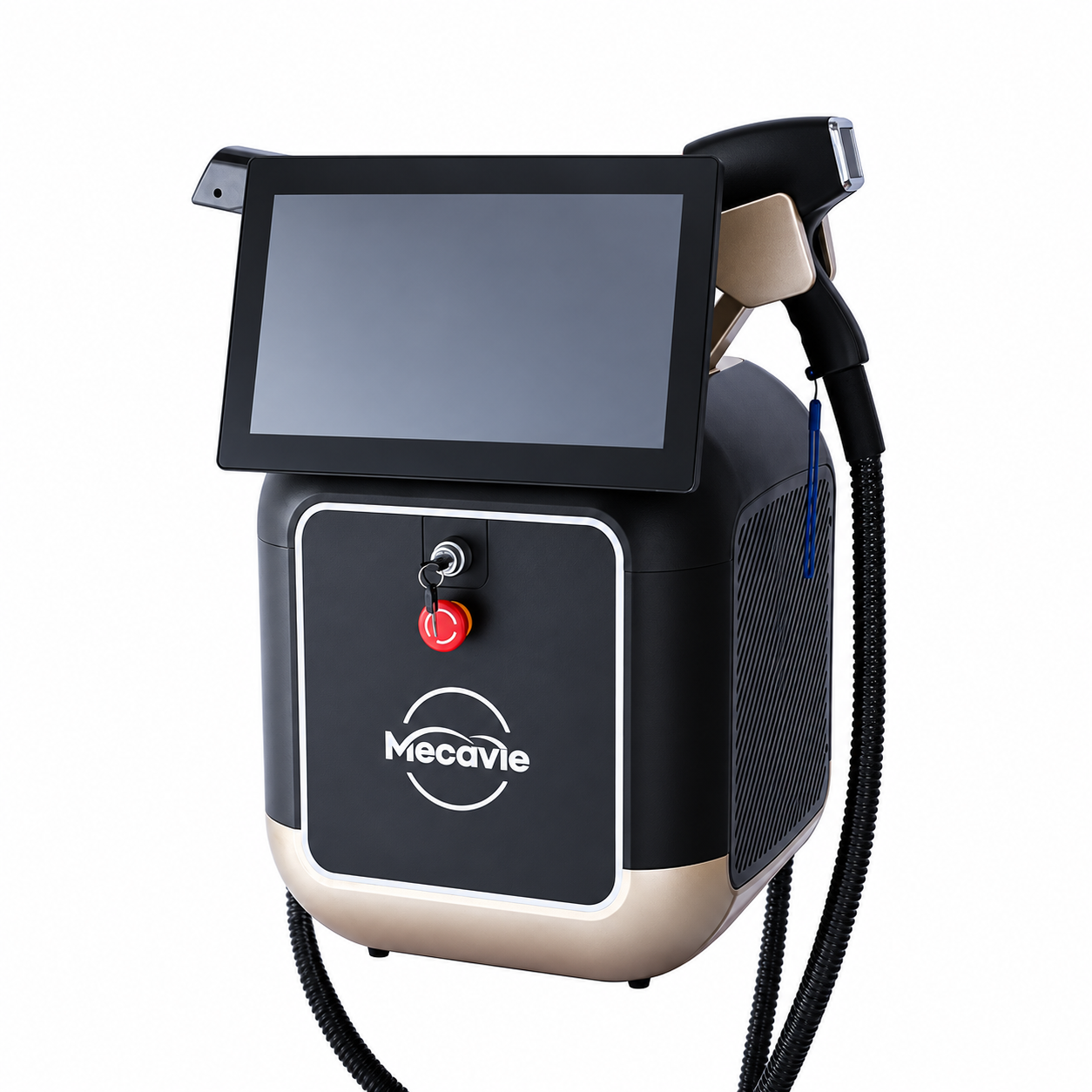

5000W 2 in 1 Diode Laser Pico Machine – Upgradeable 6Bar+FAC to 16Bar+FAC | ZENI
$1,499.00
100 in stock
Description
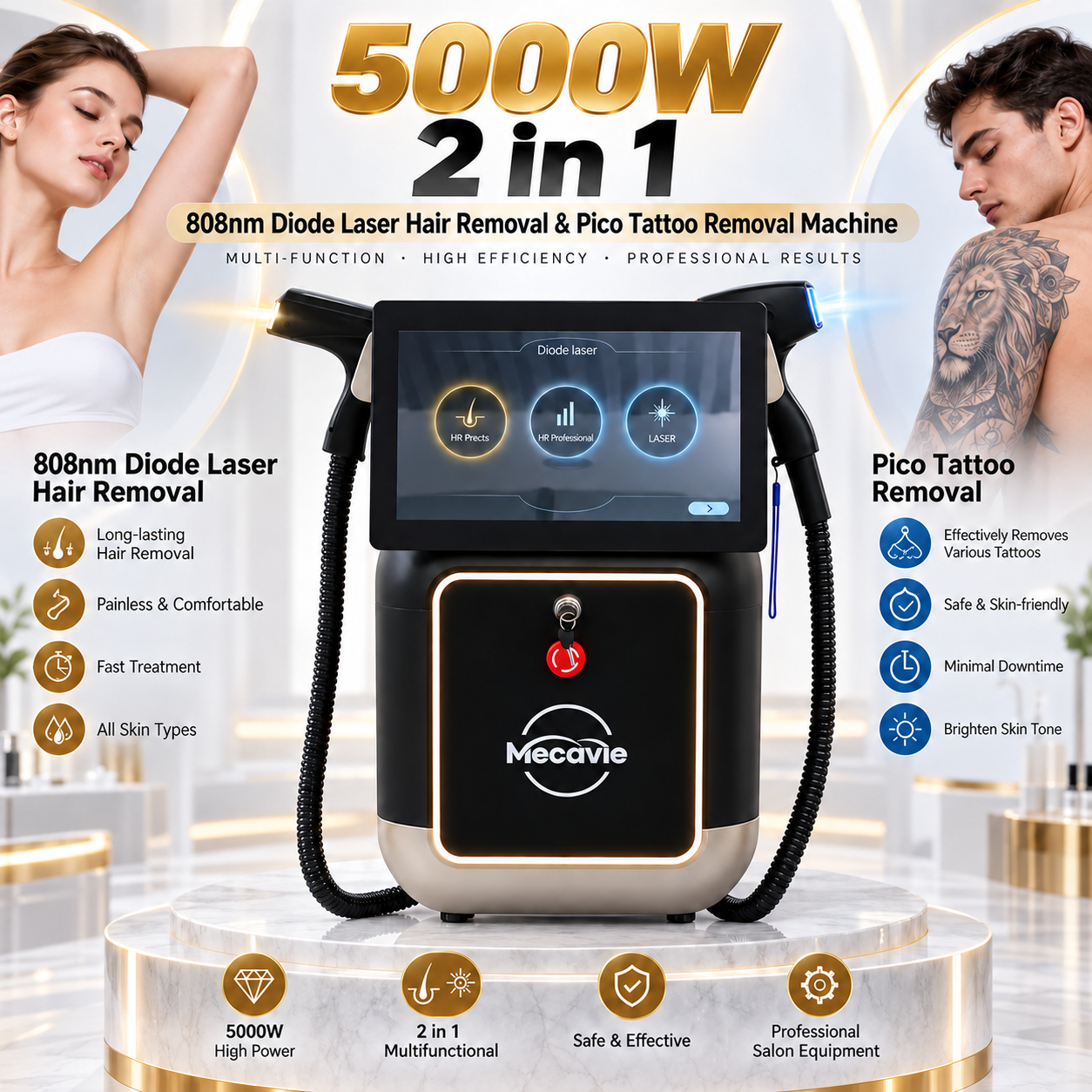

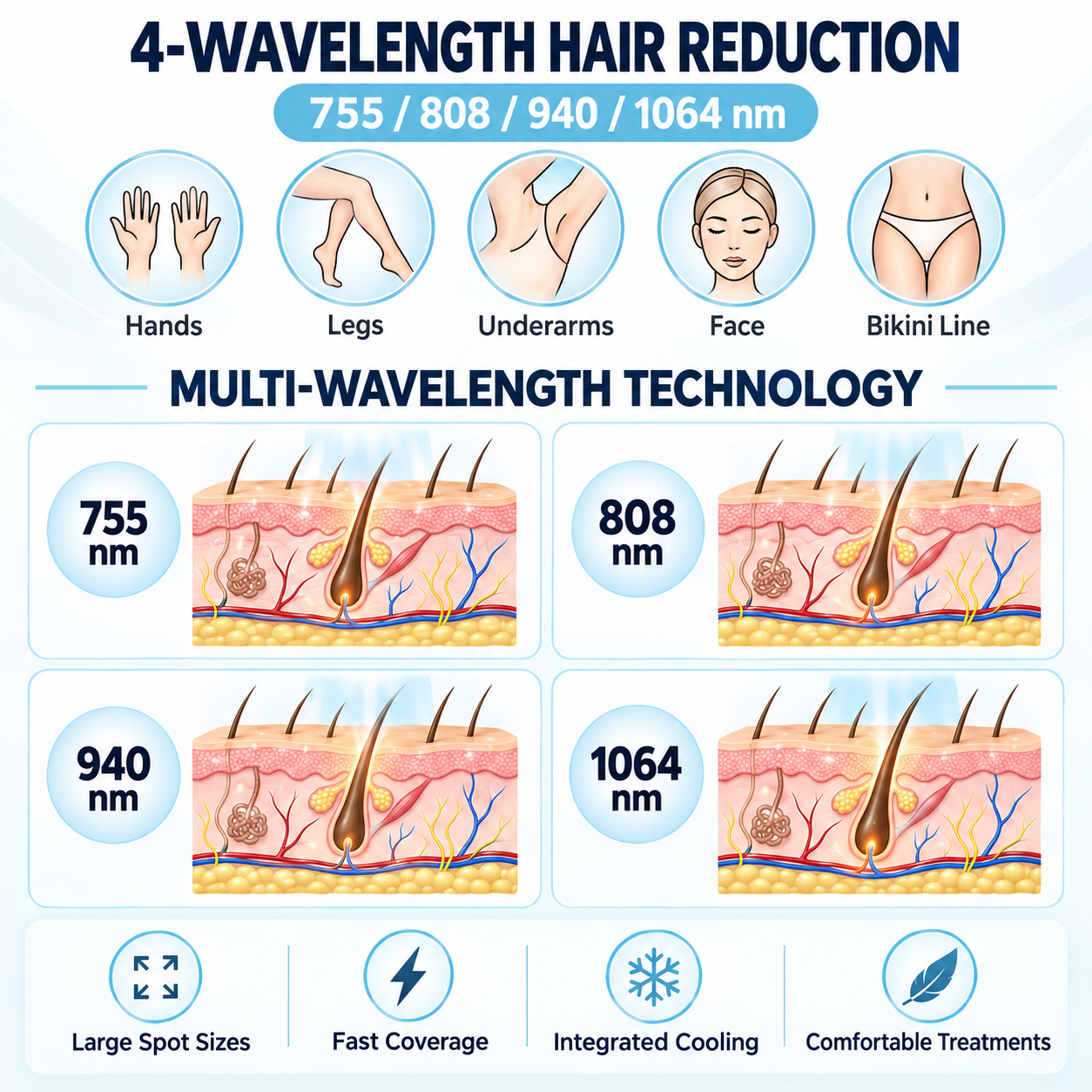


Start with 5000W. Upgrade to 16Bar+FAC. One Platform, Four Configurations.
The 5000W 2 in 1 diode laser pico machine combines 808nm diode laser hair removal with a picosecond handpiece for tattoo and pigment removal in a single platform. Unlike fixed-configuration 2-in-1 systems, it is upgradeable across four distinct laser stack options — 6Bar+FAC, 10Bar, 10Bar+FAC and 16Bar+FAC — allowing clinics to scale power and treatment speed as their patient volume grows. Clinical data supports both modalities: 808nm diode laser achieves 57.9% mean hair reduction after three sessions in Fitzpatrick IV–VI skin, and 1064nm picosecond laser delivers 78.1% excellent tattoo clearance versus 54.4% for nanosecond systems, with fewer treatment sessions (3 vs. 4, p=0.020).
High-Capacity Base
A 5000W power supply provides headroom for the full range of upgradeable laser stack configurations.
6Bar+FAC → 16Bar+FAC
Four laser stack configurations allow power scaling without replacing the entire system.
Diode + Picosecond
808nm diode for hair removal; picosecond handpiece for tattoo and pigment clearance.
57.9% / 78.1%
57.9% hair reduction after 3 sessions (Fitzpatrick IV–VI); 78.1% excellent tattoo clearance with picosecond 1064nm.
Why Upgradeability Changes the Equipment Equation
Most laser platforms force a binary choice at purchase: buy a high-power system and absorb the full capital cost upfront, or buy a lower-power system and accept its limitations indefinitely. The 5000W 2 in 1 diode laser pico machine takes a different approach. It starts with a 5000W power supply and a base configuration (6Bar+FAC or 10Bar, depending on the package selected), then allows the clinic to upgrade the diode laser stack to 10Bar+FAC or 16Bar+FAC as demand grows. This matters for two reasons. First, FAC (Fast Axis Collimation) technology improves diode-to-fiber coupling efficiency from approximately 50%–60% to approximately 85%–90% or more, meaning more of the generated laser energy reaches the treatment site rather than being lost as heat inside the handpiece[reference:9]. FAC lenses also collimate the fast axis to a far-field divergence of approximately 4.4 mrad with pointing accuracy within ±1.7 mrad, supporting consistent spot uniformity across the treatment area[reference:10]. Second, the upgrade path means a clinic does not need to predict its future volume with perfect accuracy at the time of purchase. A smaller clinic can start with the base configuration and add Bar count later; a high-volume clinic can order the 16Bar+FAC configuration from the outset. The clinical foundation of both modalities is well documented. 808nm diode laser achieves 57.9% mean hair reduction after three sessions in Fitzpatrick IV–VI skin, with hair regrowth time extending from 8 days after the first session to 33.7 days after the twelfth[reference:11][reference:12]. On the picosecond side, 1064nm picosecond laser delivers 78.1% excellent tattoo clearance versus 54.4% for nanosecond systems, with a median of 3 sessions versus 4 (p=0.020)[reference:13]. A vacuum-assisted multimodal picosecond protocol reported mean pigment clearance exceeding 90% after a mean of 3.19 treatment sessions, with no severe long-term adverse events[reference:14]. Explore our professional diode laser hair removal systems for related service planning.


Reviews
There are no reviews yet.